In crisis? Dial 988 Then press 1 for Veterans crisis line, 24/7

A breakthrough
in brain health.
MeRT doesn’t put anything into your body or numb how you feel. It measures your brain’s natural rhythm, finds where that rhythm is out of sync, and uses gentle magnetic pulses to help bring it back into balance.
One call routes you to the right program for your state. Confidential. No diagnosis required.
FDA cleared
MeRT cleared for PTSD, June 2026
20 × 15 min
Twenty sessions, fifteen minutes of treatment each
Drug-free
Awake, no sedation, drive yourself home
3 EEGs
Baseline, midway and final, to track your progress
Personalized to your brain, not a population average.
The first personalized, biomarker-guided neuromodulation technology cleared for PTSD.
MeRT stands for Magnetic e-Resonance Therapy. It is a personalized form of repetitive transcranial magnetic stimulation (rTMS) developed by Wave Neuroscience. Standard TMS has been used in psychiatry since the FDA first cleared it for depression in 2008. What makes MeRT different is that the settings come from a recording of your brain rather than a population average.
In June 2026, the FDA cleared the MeRT System for post-traumatic stress disorder. The clearance followed a double-blind, randomized, sham-controlled multisite trial with the Institute of Biosciences and Technology at Texas A&M Health, with Dr. Ken Ramos, MD, PhD as principal investigator. The system received Breakthrough Device designation from the FDA in 2024.
When your brain feels out of sync.
Your brain is constantly communicating with itself. That rhythm helps you sleep, focus, process what’s happening around you, and settle down after stress.
Blast exposure, repeated head impacts, chronic stress and sleep deprivation can disrupt that rhythm. Your scans may look normal, but you can still struggle with sleep, focus, irritability, or feeling constantly on alert.
Your body is exhausted, but your brain won’t shut off. That’s where MeRT comes in.
Twenty sessions, start to finish.
No inpatient stay and no withdrawal from anything. Most people keep working the whole time and just block about twenty minutes on the calendar, the same way they would for PT.
We map your brain
A painless qEEG records your brainwaves. It’s a cap of sensors, with no needles and nothing to swallow.
We build your protocol
Wave Neuroscience’s clinical team turns your EEG into a protocol tuned to your individual alpha frequency.
You show up, we track it
Twenty-minute visits, fifteen minutes of treatment. Three EEGs (baseline, midway, final) confirm your brain is responding.
What the qEEG does
Treatment starts with a qEEG, which records your brain activity using a soft sensor cap. It’s painless and takes about 10 minutes of recording time.
The results identify your brain’s individual rhythm and guide your treatment. We repeat the scan during treatment to see how your brain is responding and adjust your protocol when needed.
What a session is like
You sit in a chair, awake and in your normal clothes. A clinician places a magnetic coil near your scalp and delivers gentle pulses designed around your brain activity. You’ll hear a rhythmic clicking and may feel a light tapping on your scalp. Sessions typically last 15 to 30 minutes.
Then you get up and get on with your day. No sedation, no anesthesia, no recovery period. The timing and number of sessions can vary with your treatment plan.
What may change.
Everyone responds differently, but sleep is often one of the first things people notice. You may begin to experience:
Less hypervigilance
Feeling less like you have to constantly scan the room.
Better sleep
Falling asleep more easily and staying asleep longer.
Better focus
Fewer lost words and clearer thinking.
More emotional balance
A little more space between what happens and how you react.
Better connection
More energy and presence for the people and things that matter.
*These are not guarantees. Everyone responds differently, and some people do not respond to treatment.
Why we pay attention to sleep.
Sleep gives your brain time to recover. When your brain’s rhythm is disrupted, you can spend eight hours in bed and still wake up exhausted.
That’s why sleep is one of the first things we watch as treatment progresses.
It costs nothing and can help reinforce your sleep-wake cycle while treatment does its part.
Side effects and screening.
The most commonly reported side effects are headache and fatigue. As with other forms of TMS, there is also a rare risk of seizure.
Before treatment we’ll ask about your medical history, medications, implants and other factors to make sure MeRT is right for you.
Veterans can press 1 for the Veterans Crisis Line, 24/7. You can begin treatment intake afterward.
What does it cost?
It depends on where you live and which program you qualify for. You’ll know your cost before you begin. No surprises.
State program
Covered for those who qualify
For Missouri veterans, first responders and families, the program covers the evaluation, protocol, sessions and follow-up scan.
Insurance
Through your insurance
At insurance-based clinics we confirm your coverage and any out-of-pocket cost before your first session.
Self-pay
Private pay
Not covered by a program or insurance? Self-pay is available, with the full price up front.
The Missouri funded program is privately financed and independent of the VA. Taking part does not create a VA record, affect a disability rating, or require a VA referral.
Start with one call.
A trained intake specialist finds the right program for your state. Intake takes about two minutes, and we call you back within one business day.
HOW IT WORKS
A Breakthrough in Brain Health
MeRT does not put anything into your body or numb how you feel. It measures your brain’s natural rhythm, identifies where that rhythm may be out of sync, and uses gentle magnetic pulses to help bring it back into balance.
WHAT IS MeRT?
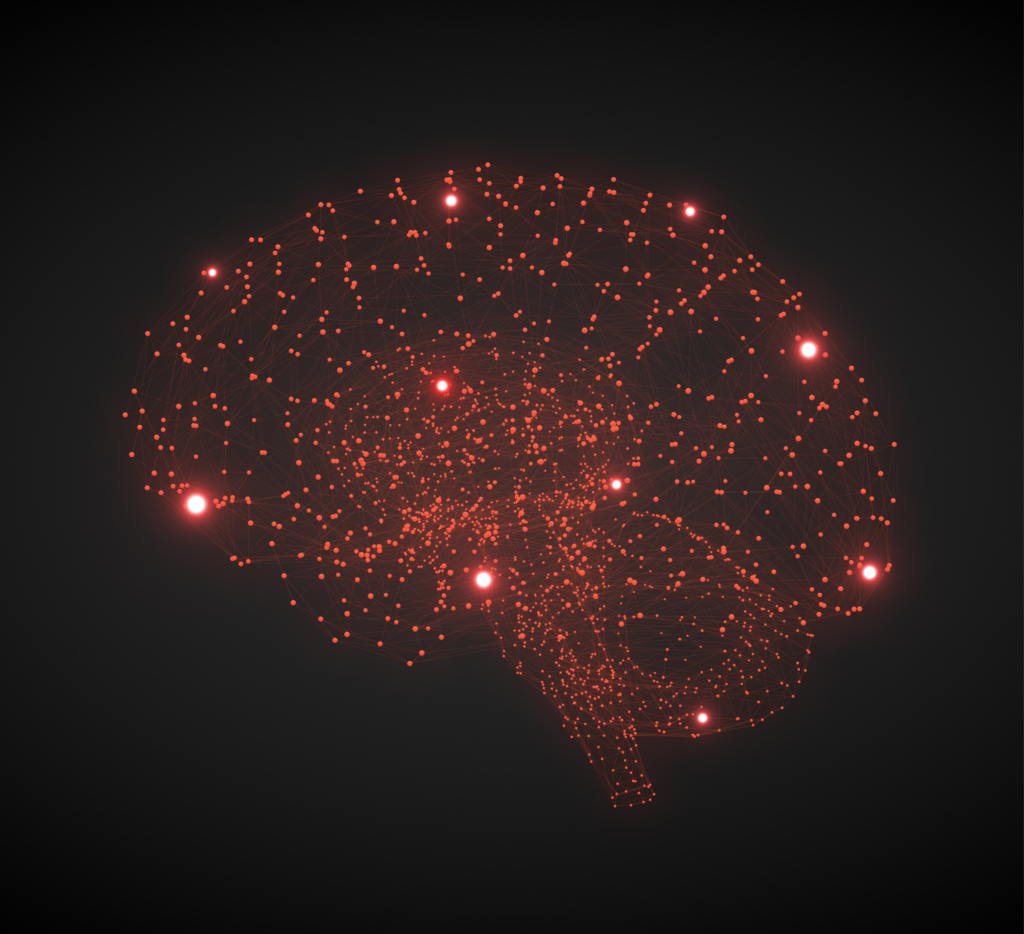
MeRT stands for Magnetic e-Resonance Therapy. It is a personalized form of repetitive transcranial magnetic stimulation (rTMS) developed by Wave Neuroscience. Standard TMS has been used in psychiatry since the FDA first cleared it for depression in 2008; what makes MeRT different is that the settings are derived from a recording of your brain rather than from a population average.
In June 2026, the FDA cleared the MeRT System for post-traumatic stress disorder, the first personalized, biomarker-guided neuromodulation technology cleared for PTSD. The clearance followed a double-blind, randomized, sham-controlled multisite trial conducted with the Institute of Biosciences and Technology at Texas A&M Health, with Dr. Ken Ramos, MD, PhD as principal investigator. The system had received Breakthrough Device designation from the FDA in 2024.
TIMING
WHEN YOUR BRAIN FEELS OUT OF SYNC
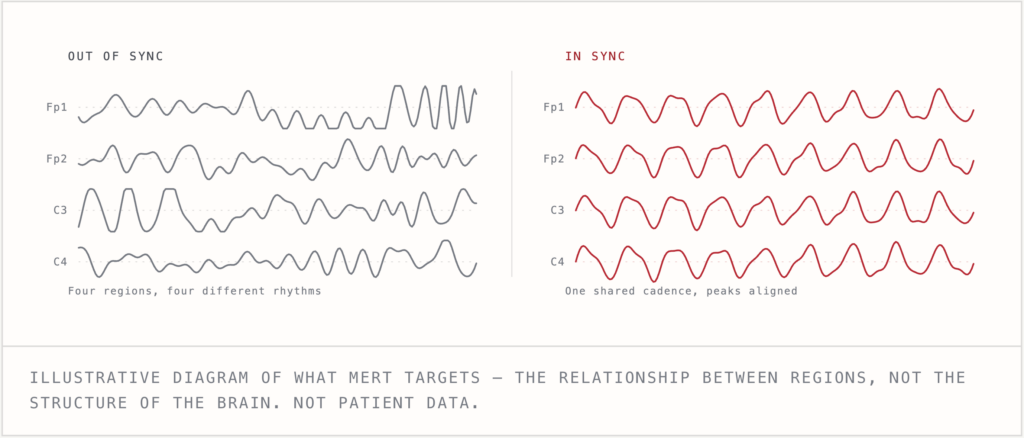
Your brain is constantly communicating with itself. That rhythm helps you sleep, focus, process what’s happening around you, and settle down after stress.
Blast exposure, repeated head impacts, chronic stress, and sleep deprivation can disrupt that rhythm. Your scans may look normal, but you can still struggle with sleep, focus, irritability, or feeling constantly on alert.
You may know the feeling: wired but tired. Your body is exhausted, but your brain won’t shut off.
That’s where MeRT comes in.
TREATMENT
WHAT THE qEEG DOES
Treatment starts with a qEEG, which records your brain activity using a soft sensor cap. The process is painless and takes about 10 minutes of recording time.
The results help identify your brain’s individual rhythm and guide your treatment. We repeat the scan during treatment to see how your brain is responding and adjust your protocol when needed.
Your brain is different. Your treatment should be too.
TREATMENT
WHAT A SESSION IS LIKE
You sit in a chair, awake and in your normal clothes. A clinician places a magnetic coil near your scalp and delivers gentle pulses designed around your individual brain activity.
You’ll hear a rhythmic clicking and may feel a light tapping on your scalp. Sessions typically last 15 to 30 minutes.
Then you get up and get on with your day. There is no sedation, anesthesia, or recovery period.
Treatment is designed to be consistent, with your progress monitored along the way. The timing and number of sessions can vary based on your individual treatment plan.
RESULTS
WHAT MAY CHANGE
Everyone responds differently, but sleep is often one of the first things people notice.
You may begin to experience:
Less Hypervigilance
Feeling less like you have to constantly scan the room.
Better Sleep
Falling asleep more easily and staying asleep longer.
Better Focus
Fewer lost words and clearer thinking.
More Emotional Balance
A little more space between what happens and how you react.
Better Connection
More energy and presence for the people and things that matter.
*These are not guarantees. Everyone responds differently, and some people do not respond to treatment.
SLEEP
Why we pay attention to sleep
Sleep gives your brain time to recover. When your brain’s rhythm is disrupted, you can spend eight hours in bed and still wake up exhausted.
That’s why sleep is one of the first things we watch as treatment progresses.
We also encourage something simple: get outside in natural morning light. It costs nothing and can help reinforce your sleep-wake cycle while treatment does its part.
EFFECTS
Side effects and screening
The most commonly reported side effects are headache and fatigue. As with other forms of TMS, there is also a rare risk of seizure.
We’ll ask about your medical history, medications, implants, and other factors before treatment to make sure MeRT is appropriate for you.
MeRT is not a crisis intervention. If you’re thinking about suicide or need immediate help, call or text 988. You can begin treatment intake afterward.
COST
WHAT DOES IT COST?
For Missouri veterans, first responders, and families, the program covers the evaluation, treatment protocol, sessions, and follow-up scan.
For everyone else, treatment may be covered through insurance or available through self-pay. You’ll know your cost before you begin.
No surprises. No unnecessary barriers. Just a clear path to getting help.
The funded program is privately financed and independent of the VA. Participation does not create a VA record, affect a disability rating, or require a VA referral.